
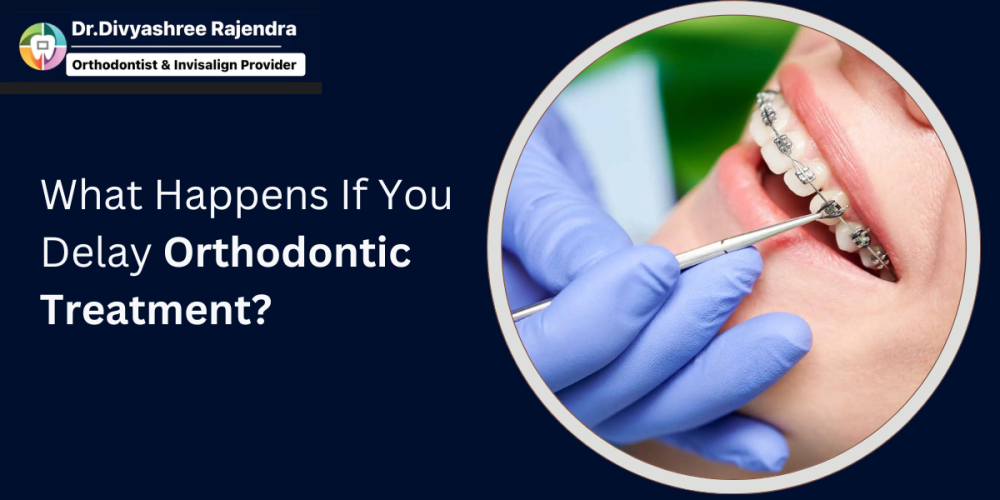
What if waiting a few months for orthodontic care could lead to years of additional dental problems?
Delayed orthodontic treatment often causes more than cosmetic concerns because untreated crooked teeth can gradually contribute to more complex oral health issues. At Dr. Divyashree Rajendra’s Orthodontics, we frequently see patients whose alignment problems have progressed over time, making treatment more challenging and increasing the risk of future dental complications.
Why Does Delayed Orthodontic Treatment Become a Bigger Problem Over Time?
Many people assume orthodontic concerns can wait until a more convenient time. However, delayed orthodontic treatment often allows existing alignment problems to progress, while the teeth and jaws continue adapting to those irregularities.
Teeth Rarely Correct Themselves
One of the biggest misconceptions is that untreated crooked teeth will naturally improve with age. In reality, most orthodontic issues either remain the same or gradually worsen over time. As a result, teeth can continue shifting, leading to increased teeth crowding and reduced space within the dental arch.
Treatment May Become More Complex
When orthodontic problems are addressed early, treatment is often simpler and more predictable. However, delaying treatment can lead to more severe alignment concerns, which may require longer treatment times and more advanced corrective procedures.
Costs Can Increase
As orthodontic problems become more complicated, the overall treatment process may require additional interventions. Consequently, both the treatment duration and the overall expense may increase.
Not sure whether your alignment issue can wait?
How Can Untreated Crooked Teeth Affect Your Oral Health?
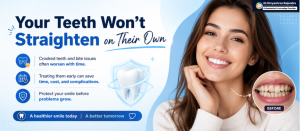
Untreated crooked teeth affect much more than appearance. In fact, they can create long-term challenges that impact daily oral hygiene and overall dental health.
Difficulty Cleaning Teeth Properly
When teeth overlap or severe teeth crowding develops, brushing and flossing become less effective. As a result, food particles and plaque can accumulate in hard-to-reach areas, increasing the likelihood of tooth decay.
Increased Risk of Gum Problems
Poor cleaning around crowded teeth often leads to gum inflammation. Moreover, untreated gum disease can eventually affect the stability of the teeth and their supporting bone structures.
Higher Chance of Tooth Wear
Misaligned teeth can create uneven pressure while chewing. Consequently, certain teeth may experience excessive wear, increasing the risk of sensitivity and enamel damage.
Greater Oral Health Risks
One of the most significant consequences of delayed orthodontic treatment is the increase in oral health risks. Because misaligned teeth create environments where bacteria can thrive, dental problems often become more common over time.
What Bite Issues Can Develop When Orthodontic Problems Are Ignored?
Bite issues often worsen when left untreated. Furthermore, the longer they remain uncorrected, the greater their impact on everyday function and comfort.
Uneven Chewing Forces
Improper bites place excessive pressure on specific teeth. As a result, this uneven force distribution may contribute to fractures, chipping, and accelerated tooth wear.
Jaw Discomfort and Strain
Many patients with untreated bite issues experience jaw discomfort, facial muscle fatigue, or tension headaches. Consequently, these symptoms can negatively affect quality of life and daily comfort.
Speech and Functional Challenges
Severe bite discrepancies may influence speech clarity and chewing efficiency. In some cases, individuals may even avoid certain foods because chewing becomes uncomfortable or difficult.
Progression of Existing Problems
Minor bite issues can gradually evolve into more complex orthodontic conditions over time. Therefore, addressing these concerns early often leads to more predictable outcomes and shorter treatment timelines.
Can Teeth Crowding Get Worse If Orthodontic Treatment Is Delayed?
Teeth crowding is one of the most common reasons patients seek orthodontic treatment. Unfortunately, teeth crowding rarely improves without professional intervention, and delayed orthodontic treatment often allows alignment problems to become more severe over time.
Natural Shifting Continues Throughout Life
Teeth are not permanently fixed in one position. Instead, natural forces, aging, and bite patterns can cause teeth to shift gradually throughout life. As a result, existing teeth crowding may worsen, particularly when delayed orthodontic treatment prevents timely correction.
Crowding Creates Additional Alignment Problems
As teeth crowding increases, neighboring teeth may rotate, overlap, or move further out of position. Consequently, these changes can affect both smile aesthetics and oral function while making future treatment more complex.
Limited Space for Proper Eruption
In younger patients, delaying treatment may reduce the available space for erupting teeth. As a result, developing teeth can emerge in unfavorable positions, increasing the likelihood of future orthodontic complications and worsening teeth crowding.
Impact on Long-Term Stability
Severe teeth crowding can make future orthodontic correction more challenging and time-consuming. However, earlier intervention often helps preserve space, improve alignment outcomes, and reduce the long-term effects of delayed orthodontic treatment.
Why Choose Dr. Divyashree Rajendra’s Orthodontics for Early Orthodontic Care?

Choosing the right orthodontist at the best orthodontic clinic can make a significant difference in treatment outcomes and overall patient experience. Therefore, selecting an experienced specialist is an important step toward achieving a healthier and more confident smile.
Dr. Divyashree Rajendra has more than 15 years of orthodontic expertise and is recognized as one of Bangalore’s leading specialists in clear aligner treatment. Additionally, as a gold medalist from RGUHS and a certified Invisalign Diamond Provider, she has successfully treated more than 1,000 clear aligner patients. Her international training in Germany and Thailand, combined with her role as a Clinical Speaker and Trainer for Invisalign India, reflects her commitment to advanced orthodontic care.
Furthermore, at Dr. Divyashree Rajendra’s Orthodontics, patients benefit from personalized treatment options, including Invisalign, Inman Aligners, Quick Smiles, Damon Braces, Fixed Braces, and Incognito Hidden Braces, ensuring solutions tailored to every smile.
What Treatment Options Are Available If Orthodontic Problems Have Already Progressed?
Even if orthodontic issues have been present for years, effective treatment solutions are available. Therefore, patients experiencing delayed orthodontic treatment should know that modern orthodontics offers multiple pathways to improvement.
These virtually invisible aligners gradually straighten teeth using custom-made trays. In addition, they are removable, comfortable, and suitable for many adult and professional patients.
Designed primarily for crowded front teeth, Inman Aligners can deliver noticeable improvements within a relatively short period. Consequently, they may be an excellent option for selected patients seeking efficient correction.
Damon Braces and Fixed Braces
Advanced self-ligating systems such as Damon Braces provide efficient tooth movement with enhanced comfort and fewer adjustments. Moreover, they can effectively address complex bite issues and alignment concerns.
Placed behind the teeth, these customized lingual braces offer discreet treatment while achieving precise orthodontic corrections. As a result, patients can improve their smiles without visible brackets.
Quick Smiles Treatment
For patients primarily concerned about visible front teeth, Quick Smiles focuses on enhancing smile aesthetics within a shorter timeframe. Therefore, it can be an attractive solution for individuals seeking targeted improvements.
The key message is simple: while delayed orthodontic treatment can create additional challenges, modern orthodontics provides effective solutions for patients at almost every stage. Furthermore, addressing concerns sooner rather than later often leads to more predictable outcomes.
Wrapping Up
Delaying orthodontic care may seem harmless initially; however, untreated crooked teeth, worsening bite issues, increasing teeth crowding, and elevated oral health risks can make future treatment significantly more complicated. Therefore, early intervention often leads to simpler, faster, and more predictable results while helping patients avoid the long-term consequences of delayed orthodontic treatment.
Key Takeaways
- Delayed orthodontic treatment can worsen alignment, bite function, and oral health risks.
- Untreated crooked teeth often increase the risk of decay, gum disease, and excessive tooth wear.
- Teeth crowding and untreated bite issues may become more difficult to correct as time passes.
- Choosing the right orthodontist at the best orthodontic clinic can help prevent complex orthodontic problems.
- Early orthodontic evaluation supports long-term dental health and more predictable treatment outcomes.
Take the first step toward a healthier smile.
FAQs
1. How long can I safely delay orthodontic treatment?
There is no universal timeline. However, the longer orthodontic issues remain untreated, the greater the chance they will worsen. An orthodontic evaluation can determine the urgency of your condition.
2. Can delayed orthodontic treatment cause permanent damage?
In some cases, yes. Severe bite problems, excessive tooth wear, gum recession, and bone loss may become more difficult to reverse if treatment is postponed for too long.
3.Is orthodontic treatment effective for adults who delayed treatment for years?
Absolutely. Many adults successfully undergo orthodontic treatment using Invisalign, Damon Braces, and other modern solutions. Treatment plans are customized according to individual needs.
4.What are the earliest signs that orthodontic treatment should not be delayed?
Common warning signs include increasing teeth crowding, difficulty cleaning teeth, jaw discomfort, uneven tooth wear, speech concerns, and noticeable bite issues.