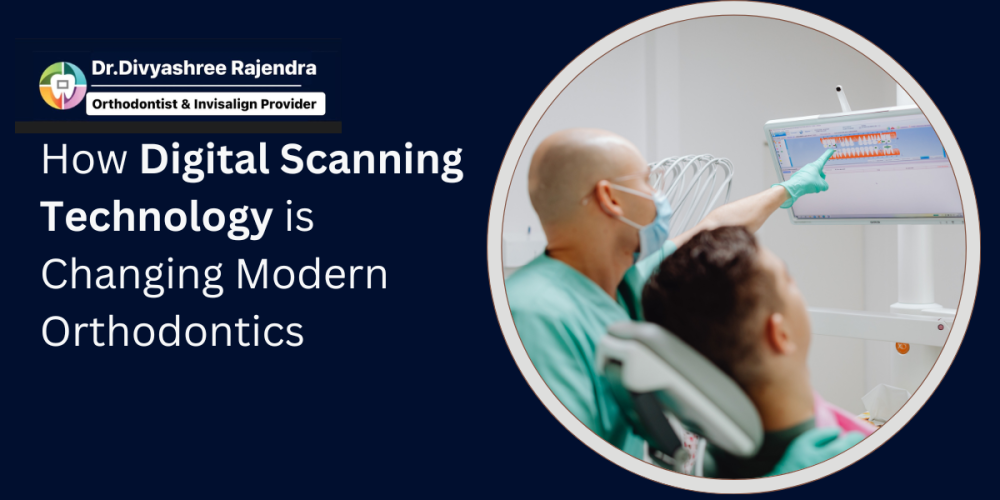
A crooked smile no longer needs to be corrected using guesswork, uncomfortable molds, or repeated adjustments. Today, digital orthodontics is transforming how orthodontists diagnose, plan, and deliver treatments with unmatched precision and efficiency. At Dr. Divyashree Rajendra’s Orthodontics, technologies like 3D teeth scanning and invisalign scanning help patients experience faster consultations, highly customized treatment plans, and smarter smile correction outcomes.
Moreover, with advanced orthodontic treatment methods and modern braces technology, patients can now achieve better results with greater comfort and predictability throughout their smile transformation journey.
How Does Digital Scanning Eliminate the Biggest Problems in Traditional Orthodontics?
Traditional orthodontic workflows had several limitations that many patients often noticed only after treatment delays or fitting issues occurred. Conventional impressions were messy, uncomfortable, and frequently inaccurate because of material distortion or slight movement during the molding process.
However, digital orthodontics solves these long-standing problems by replacing physical impressions with highly accurate digital models that improve both diagnosis and treatment precision.
The End of Messy Dental Molds
Patients no longer need to sit with impression trays filled with putty-like material for several uncomfortable minutes. Instead, modern intraoral scanners capture thousands of highly detailed images within seconds and instantly convert them into a complete digital model.
As a result, this technology improves patient comfort significantly, especially for children, teenagers, and adults who have strong gag reflexes or anxiety during traditional impressions.
Better Precision Means Better Tooth Movement
Orthodontic treatment depends heavily on millimeter-level precision because even a minor error in impressions can affect aligner fit, bracket placement, or bite correction outcomes.
With 3D teeth scanning, orthodontists can carefully analyze:
- Tooth angulations
- Jaw relationships
- Bite irregularities
- Spacing and crowding
- Arch symmetry
This advanced level of detail allows more controlled, efficient, and predictable tooth movement throughout treatment. Furthermore, when combined with modern braces technology and advanced orthodontic treatment planning, digital scans help orthodontists create highly accurate smile correction strategies.
Reduced Delays in Treatment Planning
Traditional impressions often require remakes because of bubbles, tears, or incomplete molds, which delay treatment timelines and patient progress. Fortunately, digital orthodontics remove these issues almost completely.
Digital scans are instantly transferred into treatment software, thereby reducing waiting periods between consultation, planning, and appliance fabrication. Consequently, patients can begin their treatment journey much faster and with fewer complications.
Why Is 3D Teeth Scanning Becoming the Foundation of Modern Orthodontics?
Modern orthodontics is no longer focused only on straightening teeth. Instead, today’s advanced orthodontic treatment approaches concentrate on facial balance, bite stability, smile aesthetics, and long-term oral function.
Because of this shift, 3D teeth scanning now plays a major role in delivering more precise and personalized orthodontic care.
Orthodontists Can Detect Problems Earlier
Digital scans provide highly magnified visual data that helps orthodontists identify issues that may not appear clearly during standard visual examinations.
For example, scans can reveal:
- Minor bite discrepancies
- Tooth rotation patterns
- Uneven tooth wear
- Developing crowding
- Jaw alignment irregularities
As a result, early detection allows orthodontists to intervene before conditions become more complex, painful, or difficult to treat.
More Personalized Treatment Planning
Every patient’s teeth move differently, which is why customized treatment planning has become increasingly important in digital orthodontics. Instead of relying on generalized approaches, orthodontists can now create highly personalized treatment strategies.
Using advanced software and 3D teeth scanning, orthodontists can simulate:
- Predicted tooth movement
- Treatment duration
- Smile projection
- Bite correction progress
This level of customization improves planning accuracy for both aligners and modern braces technology, ultimately helping patients achieve more predictable treatment outcomes.
Improved Communication Between Patient and Orthodontist
One major reason patients delay orthodontic treatment is uncertainty because many struggle to visualize the final outcome.
Fortunately, digital scans solve this problem by allowing patients to clearly see:
- Current dental positioning
- Predicted smile transformation
- Step-by-step movement progression
Therefore, digital orthodontics creates greater trust, improves communication, and helps patients feel more confident about starting treatment.
Long-Term Digital Record Tracking
Unlike traditional plaster models that can crack, break, or deteriorate over time, digital records remain securely stored and easily accessible throughout treatment.
Additionally, orthodontists can compare scans over different stages of treatment and monitor progress with much greater accuracy and clarity.
How Is Invisalign Scanning Changing the Success Rate of Clear Aligners?
Clear aligners require extremely accurate measurements because even small fitting variations can affect tooth movement efficiency and treatment progress.
This is exactly why invisalign scanning has become one of the most important innovations in advanced orthodontic treatment and digital orthodontics.
More Accurate Aligner Fit
Aligners work by applying controlled pressure to specific teeth in carefully planned stages. However, poor impressions can create loose-fitting trays that reduce treatment effectiveness.
Fortunately, invisalign scanning creates highly precise aligners that fit comfortably and securely, thereby helping deliver more consistent and predictable results.
As a result, patients often experience:
- Better tray adaptation
- Improved comfort
- Reduced irritation
- More predictable movement
Digital Smile Simulation Improves Decision-Making
One of the biggest advantages of invisalign scanning is the ability to visualize treatment outcomes before the process even begins.
Using digital simulations, patients can preview:
- How their smile may look
- Estimated treatment stages
- Expected alignment improvements
Consequently, this technology transforms consultations from simple discussions into highly interactive and visual treatment experiences that improve patient confidence and decision-making.
Faster Refinements During Treatment
In traditional orthodontic workflows, corrections often require repeated impressions and additional waiting periods, which increased frustration for both patients and orthodontists.
With digital orthodontics, however, orthodontists can quickly rescan teeth and modify aligner plans whenever refinements become necessary.
Because of this efficiency, treatment adjustments can be completed faster while maintaining greater precision throughout the process.
Better Compliance Tracking
Some modern scanning systems also help orthodontists evaluate whether aligners are tracking properly during treatment progression.
This allows for earlier corrections before significant treatment deviations occur, thereby improving the overall success rate of advanced orthodontic treatment.
How Is Modern Braces Technology Becoming Smarter Through Digital Orthodontics?
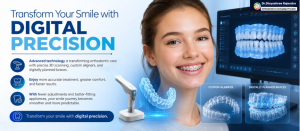
Many people assume that digital technology only benefits clear aligners. However, modern braces technology has also evolved significantly because of advanced digital planning systems and digital orthodontics.
Digital Bracket Placement Improves Efficiency
Orthodontists can now use advanced digital software to determine ideal bracket positioning before treatment begins. As a result, this improves overall treatment precision and efficiency.
This improves:
- Tooth movement control
- Bite correction accuracy
- Treatment efficiency
- Overall smile symmetry
More accurate bracket placement often reduces unnecessary adjustments later during advanced orthodontic treatment. Additionally, digital orthodontics allows orthodontists to create more predictable treatment outcomes with greater precision.
Advanced Wires Are Reducing Patient Discomfort
Modern braces technology now uses shape-memory wires that apply gentler and more continuous forces instead of aggressive pressure. Because of this, patients experience smoother and more comfortable tooth movement throughout treatment.
This means:
- Less soreness after appointments
- Smoother tooth movement
- Reduced emergency visits
- Better patient comfort
Consequently, patients often feel more comfortable and confident during their orthodontic journey.
Self-Ligating Systems Require Fewer Appointments
Systems like Damon braces reduce friction during tooth movement and often require fewer tightening visits compared to traditional braces. Therefore, these systems improve both convenience and treatment efficiency.
For working adults and students, fewer appointments can make orthodontic treatment far more manageable and less disruptive to daily routines.
Hidden Braces Are Becoming More Popular
Digital orthodontics has also improved the accuracy of Incognito hidden braces and lingual systems. Moreover, digital customization allows orthodontists to improve precision during treatment planning.
These braces are placed behind the teeth and customized digitally for each patient, thereby making them more precise, comfortable, and aesthetically appealing.
Why Does Digital Orthodontics Improve Patient Confidence During Treatment?
Orthodontic treatment is not only clinical — it is also emotional for many patients. People often worry about pain, appearance, treatment duration, and final smile results.
Fortunately, digital orthodontics help reduce many of these anxieties by creating a more transparent and personalized treatment experience.
Patients Feel More Involved in Their Treatment
When patients can visualize their treatment process, they become more confident, motivated, and cooperative throughout treatment. Furthermore, digital visualization improves communication between the orthodontist and the patient.
Seeing a digital simulation creates:
- Greater treatment motivation
- Better aligner compliance
- Improved appointment consistency
As a result, patients often feel more engaged and committed to achieving their smile goals.
Shorter Chair Time Creates a Better Experience
Digital scans are much quicker than traditional impressions, thereby reducing the amount of time patients spend in the dental chair. Additionally, technologies like 3D teeth scanning improve comfort during consultations and treatment planning.
This is particularly beneficial for:
- Children
- Busy professionals
- Nervous dental patients
Therefore, shorter appointments create a more comfortable and stress-free orthodontic experience.
Better Precision Often Means Fewer Corrections
When orthodontic planning becomes more accurate from the beginning, patients usually experience fewer mid-treatment complications or unexpected adjustments. Consequently, advanced orthodontic treatment becomes smoother and more predictable.
This creates a more efficient treatment journey while also improving overall patient satisfaction.
Aesthetic Options Encourage Adult Orthodontics
Many adults avoided braces in the past because of appearance-related concerns. However, modern digital orthodontics now offer highly aesthetic and discreet treatment options.
Today, digital orthodontics supports:
- Clear aligners
- Ceramic braces
- Hidden lingual braces
- Customized smile-focused treatments
Because of these innovations in modern braces technology, adult orthodontic acceptance has increased dramatically in recent years.
Why Do Patients Trust Dr. Divyashree Rajendra’s Orthodontics for Advanced Orthodontic Treatment?
Dr. Divyashree Rajendra combines over 15 years of orthodontic expertise with globally trained experience in digital orthodontics, invisalign scanning, and advanced orthodontic treatment. After completing her BDS at GDCRI Bangalore and earning a gold medal from RGUHS, she pursued her MDS in Orthodontics from RV Dental College.
She received aligner training in Germany and Invisalign Master training in Thailand. Today, she is a certified Invisalign Diamond Provider and Clinical Speaker for Invisalign India.
At Dr. Divyashree Rajendra’s Orthodontics, patients receive personalized care supported by 3D teeth scanning, modern braces technology, and advanced digital smile planning.
Wrapping Up
Digital scanning technology is not simply making orthodontics faster — it is making treatments more accurate, personalized, and predictable. From 3D teeth scanning to invisalign scanning and modern braces technology, digital orthodontics is improving every stage of the patient journey.
Key Takeaways
- Digital scans improve treatment precision and patient comfort.
- Advanced orthodontic treatment becomes more predictable through digital planning.
- Modern orthodontics now focuses equally on aesthetics, comfort, and long-term bite stability.
- Modern braces technology and digital orthodontics are transforming smile correction experiences for patients of all age groups.
FAQs
1. Does digital orthodontics make braces treatment faster?
Digital orthodontics improve treatment planning accuracy, which may reduce unnecessary adjustments and improve treatment efficiency in suitable cases.
- Is 3D teeth scanning safe for children?
Yes. 3D teeth scanning is completely non-invasive and safe for children, teenagers, and adults undergoing orthodontic treatment.
- Why isinvisalignscanning considered more accurate than traditional impressions?
Invisalign scanning captures highly detailed digital images that reduce errors caused by impression distortions, leading to more precise aligner fabrication.
- Can digital scanning detect bite problems early?
Yes. Digital scanning helps orthodontists identify bite irregularities, spacing issues, crowding, and alignment concerns much earlier and with greater detail.