
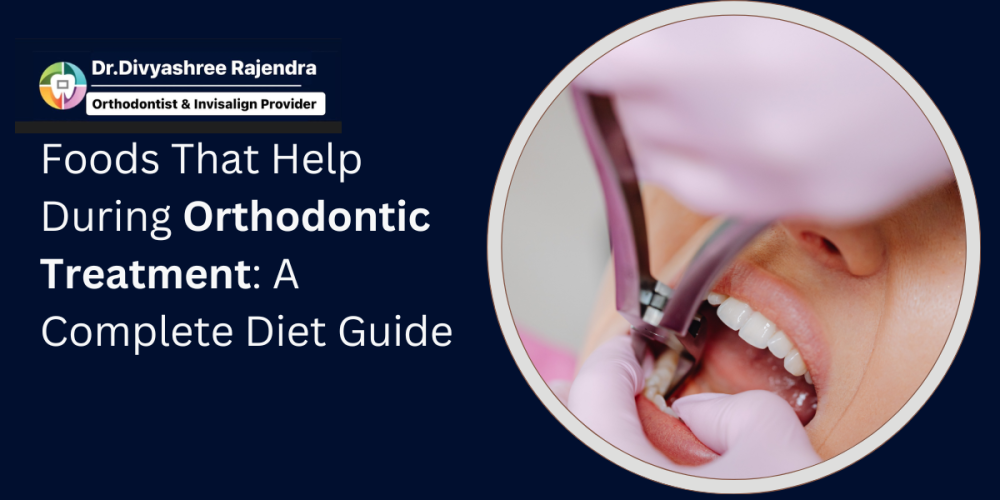
Did you know the wrong food can delay braces progress and increase discomfort?
Proper orthodontic treatment care at Dr. Divyashree Rajendra’s Orthodontics includes smart food choices that protect braces, reduce pain, and support healthy teeth alignment throughout your smile journey.
Why Is Diet Important During Orthodontic Treatment?
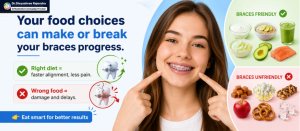
What you eat directly affects your orthodontic progress, comfort, and oral hygiene. Proper food habits help reduce appliance damage, tooth sensitivity, and inflammation during treatment.
A well-planned braces diet also supports faster recovery after adjustments and improves overall healthy teeth alignment.
How Does Food Affect Braces and Aligners?
Orthodontic appliances apply constant pressure on the teeth. Hard, sticky, or sugary foods can damage brackets, bend wires, or create plaque buildup around braces.
For clear aligners, poor eating habits may stain trays or increase bacterial growth if oral hygiene is ignored.
Which Nutrients Support Healthy Teeth Alignment?
Your teeth and jawbone need proper nutrition during orthodontic treatment care. Important nutrients include:
- Calcium for stronger teeth and bones
- Vitamin D for calcium absorption
- Protein for tissue repair
- Phosphorus for enamel protection
- Vitamin C for gum health
Including these nutrients helps improve treatment efficiency and reduces oral complications.
What Foods Reduce Orthodontic Discomfort?
After braces tightening or new aligners, soft foods help minimize pressure and soreness. Some excellent choices include:
- Yogurt
- Smoothies
- Mashed potatoes
- Soups
- Soft rice dishes
- Oatmeal
- Bananas
These are among the best foods for braces patients during the first few adjustment days.
Which Foods Are Best for Braces Patients?
Choosing the right foods protects your braces while keeping your treatment comfortable and effective. Soft, nutritious meals make orthodontic care easier.
Smart eating habits also reduce emergency visits caused by broken brackets or loose wires.
What Are the Best Soft Foods During Braces Treatment?
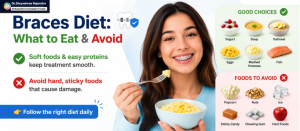
Soft foods are ideal because they require less chewing pressure. Recommended options include:
Dairy Products
- Paneer
- Yogurt
- Cheese
- Milkshakes
Protein Rich Foods
- Scrambled eggs
- Soft chicken
- Fish
- Lentils
Easy to Chew Fruits
- Bananas
- Watermelon
- Papaya
- Mangoes
Comfortable Carbohydrates
- Pasta
- Soft rotis
- Rice
- Idli
- Upma
These foods for braces patients support healing and improve overall orthodontic treatment care.
Which Foods Should Braces Patients Avoid?
Certain foods commonly damage braces and slow progress.
Hard Foods
- Nuts
- Ice cubes
- Hard candies
- Popcorn kernels
Sticky Foods
- Caramel
- Chewing gum
- Sticky toffees
Crunchy Foods
- Chips
- Hard tacos
- Crusty bread
These can loosen brackets, bend wires, or increase treatment duration.
Can Sugary Foods Affect Orthodontic Results?
Yes. Excess sugar creates plaque around brackets and aligners, increasing the risk of cavities and white spot lesions.
Limiting sugary snacks is one of the most important braces diet tips for maintaining healthy teeth during treatment.
How Should Invisalign Patients Manage Their Diet?
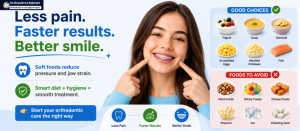
Clear aligners offer more food flexibility compared to traditional braces. However, proper eating habits still play a major role in treatment success.
A good invisalign food guide helps patients avoid staining, bacteria buildup, and aligner damage.
What Can You Eat with Invisalign?
One major advantage of Invisalign is that aligners are removable. Patients can enjoy most foods after removing trays.
Popular options include:
- Salads
- Fruits
- Sandwiches
- Rice dishes
- Nuts
- Pizza
However, aligners must always be removed before eating.
What Drinks Should Invisalign Users Avoid?
Drinking colored or sugary beverages while wearing aligners may stain trays and trap bacteria.
Avoid:
- Coffee
- Tea
- Red wine
- Soda
- Energy drinks
Water remains the safest option while aligners are in place.
Why Is Cleaning Important After Meals?
Food particles trapped between teeth and aligners increase cavity risk. Always:
- Brush after meals
- Rinse aligners properly
- Floss daily
- Reinsert trays only after cleaning
This simple routine improves overall orthodontic treatment care and aligner hygiene.
Can Poor Eating Habits Affect Jaw Alignment?
Many people do not realize that diet and chewing habits can influence jaw health during orthodontic treatment. Poor food choices may increase strain on jaw muscles and joints.
This can worsen headaches, facial pain, and jaw discomfort associated with alignment issues. Following proper braces diet tips during treatment helps reduce unnecessary pressure on the jaw and supports long term oral comfort.
How Are Jaw Alignment and Headache Connected?
Improper jaw alignment places stress on the temporomandibular joint, also called the TMJ. This stress may trigger:
- Frequent headaches
- Facial tension
- Neck pain
- Ear discomfort
- Jaw clicking
Orthodontic treatment helps improve bite balance, reduce pressure on jaw muscles over time, and support healthy teeth alignment.
Can Hard Foods Increase Jaw Pain?
Yes. Constant chewing of hard foods can overload already strained jaw joints.
Patients experiencing TMJ discomfort should avoid:
- Hard nuts
- Tough meats
- Ice chewing
- Crunchy snacks
Soft meals reduce jaw stress and improve comfort during treatment. These recommendations are also considered important braces diet tips for patients experiencing jaw strain.
Which Foods Help Reduce Jaw Tension?
Foods that require gentle chewing are beneficial for patients with jaw pain and headaches.
Helpful choices include:
- Soups
- Soft fruits
- Cooked vegetables
- Smoothies
- Rice dishes
- Yogurt bowls
These foods for braces patients support healing and reduce muscle fatigue around the jaw.
Why Is Orthodontic Evaluation Important for Chronic Headaches?
Sometimes recurring headaches are linked to bite imbalance rather than neurological problems.
Orthodontic assessments help identify:
- Misaligned bites
- Teeth grinding
- Jaw strain
- Uneven chewing pressure
Correcting these issues can significantly improve quality of life and support healthy teeth alignment over time.
Why Choose Dr. Divyashree Rajendra’s Orthodontics for Orthodontic Treatment Care?
Choosing the right orthodontist makes a major difference in treatment quality, comfort, and long-term smile results. Expertise becomes especially important for advanced aligner treatments and complex bite corrections.
At Dr. Divyashree Rajendra’s Orthodontics, patients receive personalized orthodontic treatment care supported by global expertise and advanced technology.
What Makes Dr. Divyashree Rajendra an Expert in Orthodontics?
Dr. Divyashree Rajendra has over 15 years of orthodontic experience and is among Bangalore’s early adopters of clear aligner technology. A gold medalist from RGUHS and certified Invisalign Diamond Provider, she has treated over 1000 aligner patients successfully. Her international training in Germany and Thailand, combined with her role as a Clinical Speaker and Trainer for Invisalign India, reflects her deep expertise in modern orthodontics.
The clinic offers advanced treatment options including Invisalign, Damon Braces, Inman Aligners, Quick Smiles, and Incognito Hidden Braces for patients seeking healthy teeth alignment with comfort and precision. Patients also receive personalized invisalign food guide recommendations and practical braces diet tips throughout treatment.
Wrapping Up
Proper food choices play a powerful role in successful orthodontic treatment care. From reducing discomfort to protecting braces and supporting healthy teeth alignment, your daily diet can directly influence treatment results.
Important Reminders for Patients
- Choose soft, nutrient rich foods during treatment
- Avoid sticky and hard foods that damage braces
- Follow proper braces diet tips throughout treatment
- Include recommended foods for braces patients for better comfort
- Maintain excellent oral hygiene after every meal
- Follow an appropriate invisalign food guide if using clear aligners
- Seek orthodontic evaluation if jaw pain or headaches persist
A healthier smile starts with smarter eating habits and expert orthodontic guidance.
FAQs
1. What are the best foods for braces patients after tightening appointments?
Soft foods like yogurt, soups, mashed potatoes, oatmeal, smoothies, and rice dishes are ideal because they reduce chewing pressure and discomfort.
- Can Invisalign patients eat normally during treatment?
Yes. Invisalign aligners are removable, allowing patients to eat most foods comfortably. However, aligners should always be removed before eating or drinking anything except water.
- Do braces help reduce headaches caused by jaw alignment problems?
In many cases, yes. Correcting bite imbalance and jaw misalignment can reduce muscle strain around the jaw joint, which may help decrease frequent headaches.
- Which foods should I completely avoid with braces?
Avoid hard candies, popcorn kernels, chewing gum, caramel, ice cubes, and crunchy snacks because they can break brackets or bend orthodontic wires.