
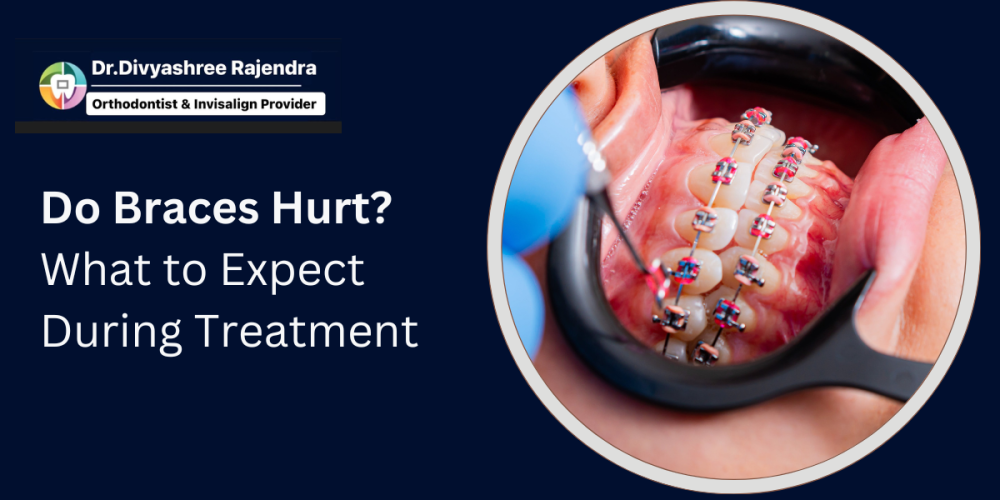
One of the most common questions patients ask is, “Do braces hurt?” The short answer is yes; braces can cause some discomfort; however, it is usually mild, temporary, and manageable. Understanding what causes orthodontic discomfort and how braces pain management works can make the experience much less stressful.
At Dr. Divyashree Rajendra’s Orthodontics, patients are guided through every stage of treatment, so they know exactly what to expect from the first week with braces to routine braces adjustment appointments.
If you are considering braces or clear aligners, this guide will help you understand the reality behind do braces hurt concerns, how long the discomfort lasts, and what you can do to stay comfortable throughout your smile journey.

Why Do Braces Hurt in the First Place?
Braces work by applying gentle, continuous pressure to move teeth into better alignment. As a result, this pressure affects the teeth, surrounding ligaments, and jawbone, which is why you may experience orthodontic discomfort at times.
The discomfort is actually a sign that your teeth are responding to treatment and gradually beginning to shift into their desired positions.

What Causes Orthodontic Discomfort?
Pressure on the Teeth
The archwire and brackets apply controlled force to move teeth gradually, and this process can create temporary soreness.
Inflammation in the Ligaments
The ligaments around each tooth temporarily become inflamed as they adapt to movement, which contributes to orthodontic discomfort during treatment.
Mouth Irritation
Brackets and wires may rub against the cheeks, lips, or tongue, especially during the first week with braces, when your mouth is still adjusting to the appliances.
Is the Pain Severe?
For most people, the answer to “Do braces hurt?” is no. Instead, the sensation is usually described as soreness, pressure, or tenderness rather than sharp pain. Although discomfort tends to peak within the first few days after braces are placed or following a braces adjustment, it gradually improves as the mouth adapts.
What Should You Expect During the First Week with Braces?
The first week with braces is typically when patients notice the biggest change. During this period, your mouth is adjusting to the new appliances, while your teeth are beginning to move into alignment.
Days 1–3: The Most Noticeable Soreness
During the first few days, you may experience:
- Tender teeth when biting or chewing
- A feeling of pressure across the mouth
- Mild headaches or jaw soreness in some cases
- Irritation where brackets touch the cheeks or lips
Therefore, soft foods such as yogurt, soups, mashed potatoes, smoothies, and pasta are usually more comfortable during this phase.
Days 4–7: Adjustment Begins
By the middle of the week, most people notice that the soreness is easing. In addition, the mouth starts adapting to the brackets and wires, so irritation becomes less noticeable and daily activities feel more comfortable.
Braces Pain Management Tips for the First Week
Effective braces pain management can make the adjustment period much easier and help you stay comfortable throughout treatment.
Use Orthodontic Wax
Apply wax to any bracket or wire that is rubbing against your cheeks or lips, as this can reduce irritation significantly.
Eat Soft Foods
Choose foods that require minimal chewing while your teeth are tender and gradually return to your normal diet as comfort improves.
Rinse with Warm Salt Water
A gentle saltwater rinse can soothe irritated tissues in the mouth and provide temporary relief.
Take Over-the-Counter Pain Relievers if Needed
Ibuprofen or acetaminophen may help manage temporary discomfort; however, always follow your doctor’s guidance and medication instructions.
Starting Braces Soon?
Book your consultation with Dr. Divyashree Rajendra’s Orthodontics and receive a personalized braces pain management plan for a more comfortable first week with braces and every future braces adjustment.
Schedule Your Visit
How Much Discomfort Should You Expect After a Braces Adjustment?

Regular braces adjustment appointments are an important part of treatment. During these visits, your orthodontist may tighten the wire, replace elastics, or make small changes to keep your teeth moving in the right direction.
These adjustments can cause temporary soreness; however, it is usually milder than the discomfort experienced during the initial placement of braces.
What Does a Braces Adjustment Feel Like?
Patients may experience:
- Pressure on the teeth during the appointment
- Mild soreness for 1–3 days afterward
- Sensitivity when chewing
How Often Are Adjustments Needed?
Most patients visit their orthodontist every 4–8 weeks, depending on their treatment plan and progress.
Why Is the Soreness Temporary?
Your teeth and supporting structures gradually adapt after each braces adjustment. As treatment progresses, many patients find that orthodontic discomfort becomes less noticeable over time because their mouths become accustomed to the movement.
How Can You Manage Braces Pain and Orthodontic Discomfort Comfortably?
Effective braces pain management focuses on reducing soreness and preventing irritation. Although some sensitivity is expected after a braces adjustment, the goal is to make the adjustment period comfortable and manageable rather than completely pain-free.
Practical Braces Pain Management Strategies
Choose Soft Foods After Adjustments
Soups, eggs, rice, oatmeal, smoothies, and cooked vegetables are gentle on sore teeth and can make eating more comfortable.
Use Cold Compresses
Applying a cold pack to the outside of your cheeks for 10–15 minutes can help reduce inflammation and temporary discomfort.
Maintain Excellent Oral Hygiene
Clean teeth and gums are less likely to become irritated. Therefore, brush carefully around brackets and use floss or interdental cleaners daily.
Use Orthodontic Wax Consistently
Wax creates a smooth barrier between brackets and soft tissues, helping prevent sores from developing.
Stay Hydrated
A moist mouth is less prone to irritation, so drink water regularly throughout the day.
Avoid Hard or Sticky Foods
Foods such as nuts, popcorn, caramel, and chewing gum can increase discomfort and may damage your braces.
When Should You Call Your Orthodontist?
Contact your orthodontist if you experience:
- Severe or worsening pain
- A wire poking that you cannot manage with wax
- A loose bracket causing significant irritation
- Swelling, bleeding, or signs of infection
Why Choose Dr. Divyashree Rajendra’s Orthodontics for Comfortable Orthodontic Treatment?
Comfort during orthodontic treatment depends not only on the type of braces but also on the expertise of the orthodontist guiding the process. Therefore, Dr. Divyashree Rajendra’s Orthodontics combines advanced technology, precise treatment planning, and patient-focused care to help minimize unnecessary discomfort.
Dr. Divyashree Rajendra has more than 15 years of orthodontic experience and is internationally recognized for her expertise in clear aligner therapy. As a certified Invisalign Diamond Provider and Invisalign India Trainer, she has successfully treated over 1,000 patients using modern, minimally invasive techniques. Additionally, the clinic offers multiple treatment options, including Invisalign, Damon Braces, lingual braces, and Quick Smiles solutions, allowing patients to choose an approach that suits both their comfort level and lifestyle.
Want a More Comfortable Orthodontic Experience?
Explore Invisalign, Damon Braces, and other advanced options with Dr. Divyashree Rajendra’s Orthodontics.
Do Different Types of Braces Cause Different Levels of Discomfort?
Many patients who ask, “Do braces hurt?” are often surprised to learn that different orthodontic appliances can create different sensations throughout treatment. However, the level of discomfort varies based on individual sensitivity, treatment complexity, and the appliance being used.
| Treatment Type | What to Expect
|
| Traditional Metal Braces | Most noticeable cheek and lip irritation initially because of the brackets.
|
| Damon Braces | Often reported as more comfortable because they use lighter forces and self-ligating brackets.
|
| Clear Aligners (Invisalign) | Usually causes less irritation to soft tissues, although each new aligner tray may create temporary pressure for a day or two.
|
| Lingual Braces (Hidden Braces) | Can cause tongue irritation initially because the brackets are placed behind the teeth.
|
A Reassuring Perspective
Regardless of the treatment type, the discomfort is temporary and generally decreases as your mouth adapts. Furthermore, the long-term benefits—including improved alignment, easier cleaning, better bite function, and a more confident smile—far outweigh the short adjustment periods.
Still Wondering, “Do Braces Hurt?”
Talk to Dr. Divyashree Rajendra’s Orthodontics and get honest answers about orthodontic discomfort, braces pain management, and what to expect during your first week with braces.
Wrapping Up
So, do braces hurt? Braces can cause temporary soreness, but the discomfort is usually mild, manageable, and short-lived. Knowing what to expect during the first week with braces and after each braces adjustment can make the experience much less intimidating and help patients feel more confident throughout treatment.
With the right braces pain management strategies and guidance from an experienced orthodontist, most patients adapt quickly and continue treatment comfortably.
Key Takeaways
- Orthodontic discomfort is a normal sign that teeth are moving.
- The first few days after placement or a braces adjustment are usually the most noticeable.
- Soft foods, orthodontic wax, saltwater rinses, and good oral hygiene can significantly improve comfort.
FAQs
1. How long does braces pain usually last?
Most soreness lasts 3–7 days after braces are first placed or adjusted. Mild tenderness may continue for a few more days, but severe pain is uncommon.
- Canbracespain affect sleep?
Some people notice mild discomfort at night during the first few days, but it rarely causes major sleep problems. Taking a recommended pain reliever before bed and using a cold compress can help.
- Do clear aligners hurt less than braces?
Clear aligners are often more comfortable because they do not have brackets or wires that irritate the cheeks and lips. However, each new aligner tray can still create temporary pressure and soreness.
- Is it normal for teeth to feel loose during treatment?
Yes. Teeth may feel slightly loose at times because the supporting structures are remodeled as the teeth move. This is a normal part of orthodontic treatment.